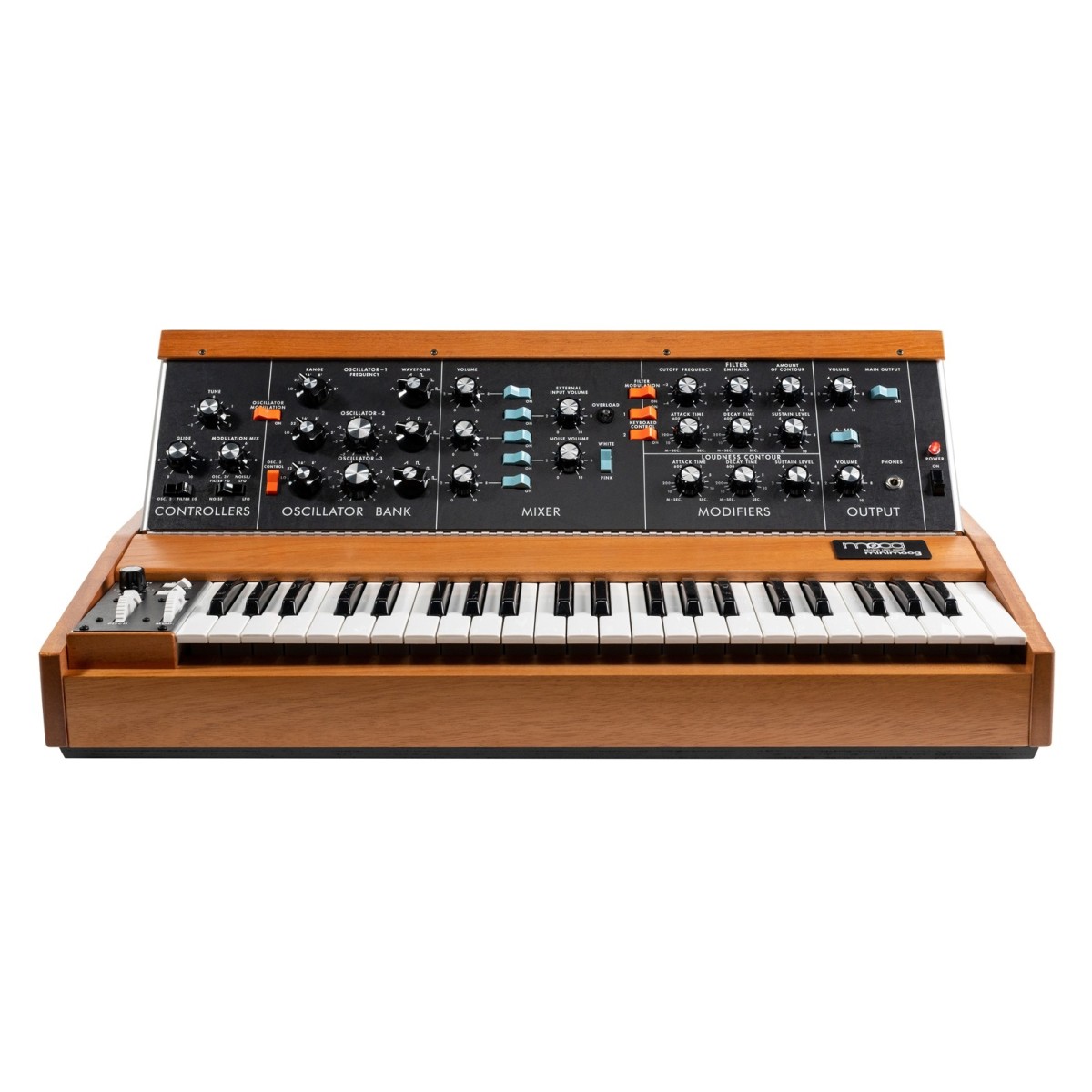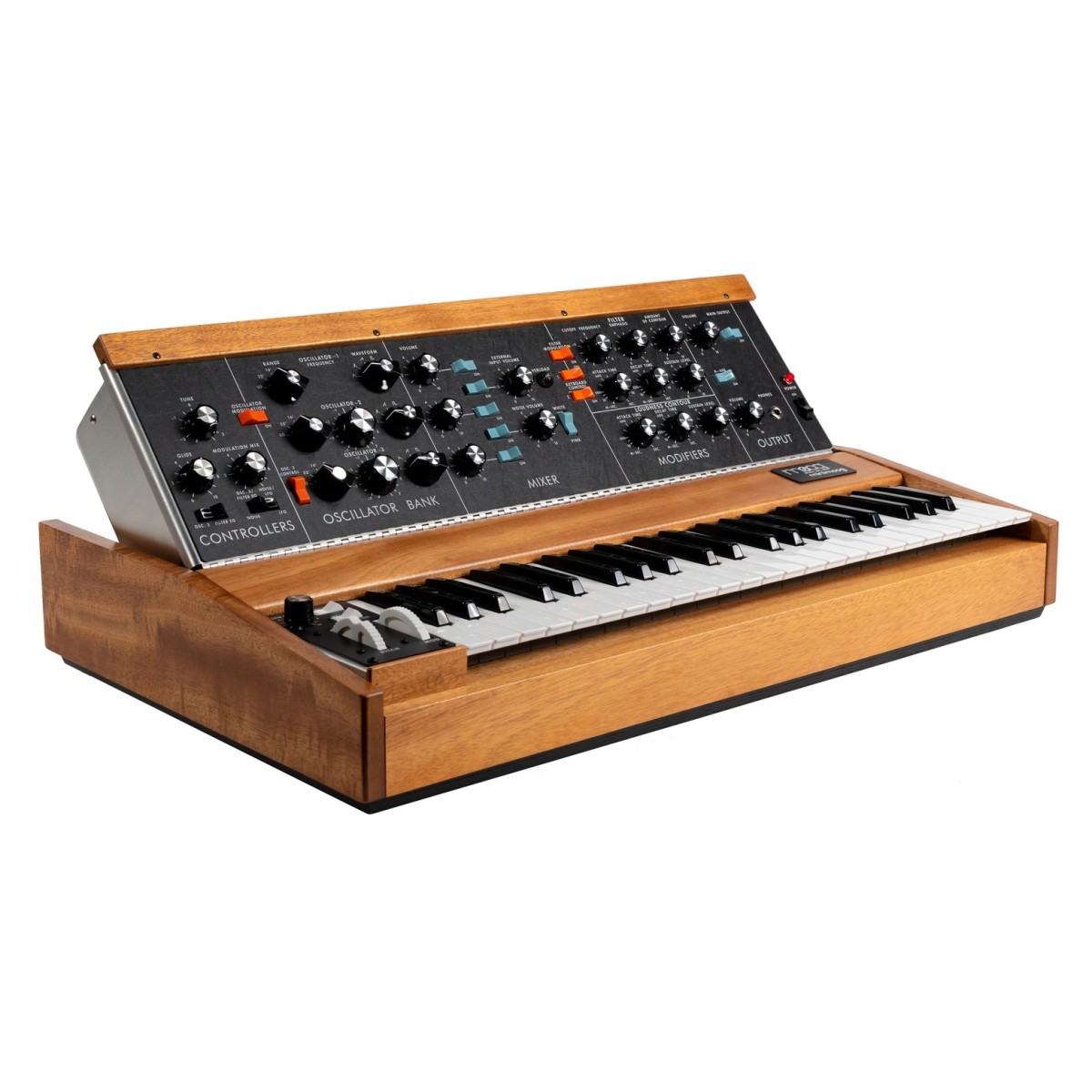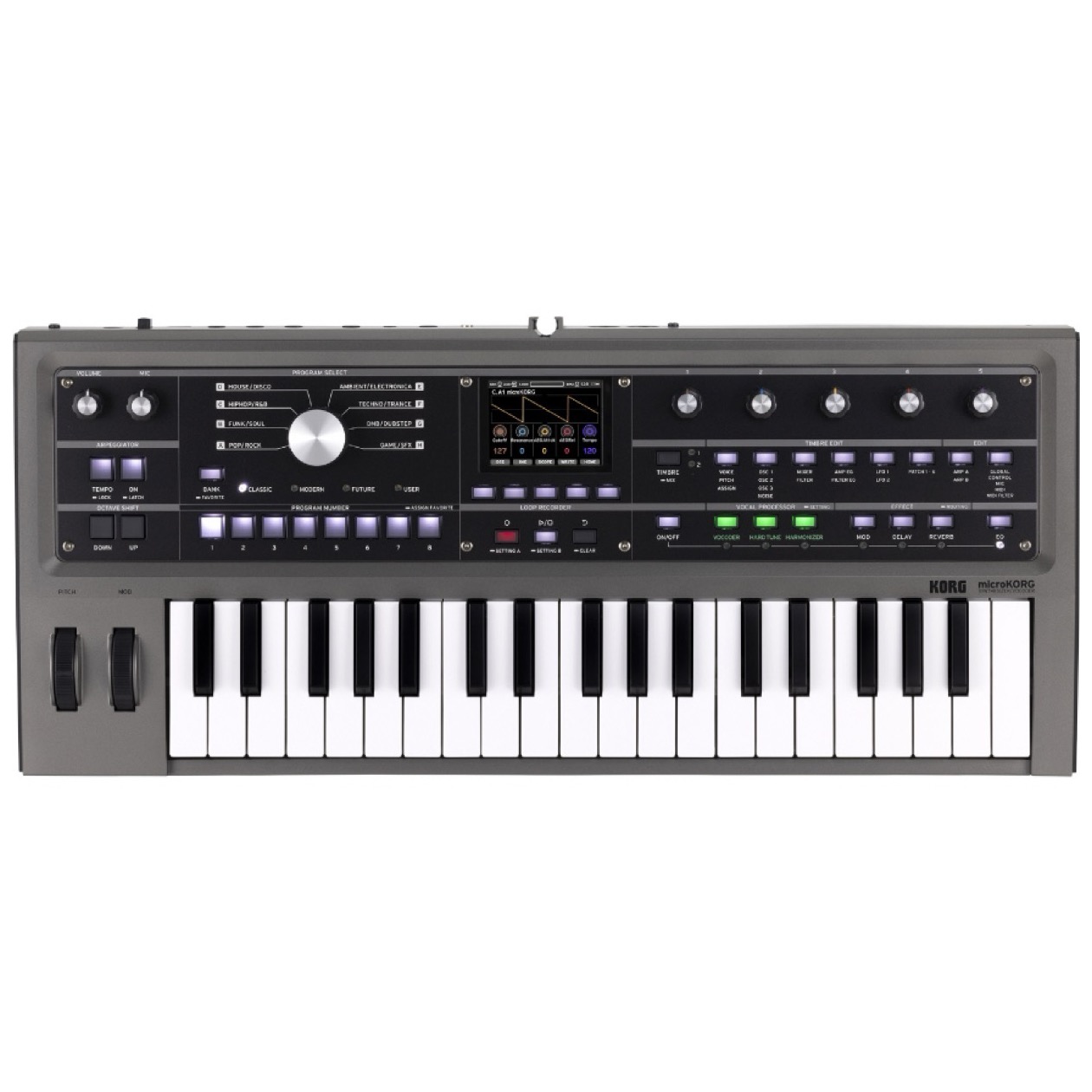



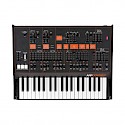






The Moog Minimoog Model D Analog Synthesizer, Mahogany Cabinet is a classic monophonic synth suited to performers, producers, and sound designers seeking hands-on analog control. Its three-oscillator design works alongside a noise generator and external input, giving you a wide foundation for shaping basslines, leads, and textures.
The iconic low-pass ladder filter lets you sculpt frequencies with precision, supported by contour controls that respond quickly or slowly depending on your setup. Modern additions expand its flexibility without altering the original signal path.
A dedicated analog LFO introduces extra movement, while MIDI connectivity allows easy integration into current studio or stage setups. The spring-loaded pitch wheel improves expressive playing, and the mixer feedback control pushes the sound into saturated territory when needed. Built into a cherry cabinet with an aluminium chassis, it feels solid and ready for regular use. This run is extremely limited and the final run of the Model D - ever; so get it while you can.
Classic analog sound shaping
The Minimoog Model D keeps its original analog architecture, giving you direct access to three oscillators that cover a wide frequency range. Each oscillator offers multiple waveforms, so you can shape everything from smooth tones to sharper edges.
Combined with the noise generator and external audio input, this setup encourages experimentation. The mixer section lets you balance these sources before they reach the filter, helping you build layered sounds with clarity. With no patch cables required, you can focus on playing and adjusting controls in real time, making it a practical choice for fast creative work.
Iconic filter with detailed control
At the centre of its sound is the voltage controlled low-pass ladder filter, known for its smooth response and musical character. It spans a wide frequency range and uses a steep slope to shape harmonics effectively. Keyboard tracking options allow the filter to respond to your playing style, while contour controls adjust how quickly the sound evolves. Attack, decay, and sustain parameters give you control over how each note behaves, from sharp plucks to longer evolving tones. This level of detail helps you fine tune your sound without needing additional processing.
Expanded modulation and performance options
This version introduces useful updates that extend its capabilities. The dedicated analog LFO offers triangle and square waveforms, giving you more ways to modulate pitch, filter, or amplitude. A Fatar keybed adds a responsive feel, with velocity and after pressure available through control voltage outputs.
The spring-loaded pitch wheel returns to centre, making expressive bends more controlled during performance. You also get glide control for smooth transitions between notes, along with selectable note priority settings to match your playing approach.
Modern connectivity with vintage build
While the sound engine stays true to its original design, the inclusion of MIDI input, output, and thru makes it easier to integrate with modern gear. Multiple CV connections allow interaction with other analog equipment, including control over pitch, filter cutoff, and loudness.
The mixer feedback modification lets you push the signal into overdrive, adding a more aggressive edge when required. Housed in a locally sourced cherry cabinet with a hand-finished aluminium chassis, the instrument feels durable and stable. This combination of traditional construction and updated control makes it suitable for both studio setups and live use.